How Many Calories Are in 5 Oz of Ground Beef How Many Calories in 1/2 Medium Tomato
Beans are amid the most versatile and commonly eaten foods throughout the globe, and many varieties are grown in the U.S. Because of their nutritional limerick, these economic foods have the potential to better the diet quality and long-term health of those who consume beans regularly [1, 2, iii].
The purpose of this publication is to provide testify-based nutrition and health information about beans, preparation tips, sample recipes and references for farther study.
Food-rich Beans
Dry edible beans, such as pinto, navy, kidney, pink and black beans, are role of the legume family. A legume establish produces seeds in a pod; dry beans are the mature seeds within these pods. Other members of the legume family unit include lentils, peas, chickpeas, peanuts and soybeans [iv].
Every bit shown in Tables 1 and 2, dry edible beans are food-rich foods; they contain a variety of vitamins, minerals and other nutrients while providing a moderate amount of calories. Beans provide protein, cobweb, folate, atomic number 26, potassium and magnesium while containing petty or no total fat, trans-fatty, sodium and cholesterol [5, 6]. Considering of their loftier concentration of health-promoting nutrients, consuming more beans in the American diet could ameliorate overall health and also decrease the chance of developing sure diseases, including heart disease, obesity and many types of cancers. The 2010 Dietary Guidelines for Americans recommend consuming 1.5 cups of beans per week to take reward of these potential health benefits [seven].
Fiber Booster
Diet experts recommend that adults consume 25 to 38 grams (g) of dietary fiber per twenty-four hour period (14 g per i,000 calories); still, the majority of Americans practice not achieve this recommendation consistently [seven]. Dietary fiber intake contributes to feelings of fullness or satiety and helps maintain functioning of the digestive arrangement [seven, 9]. Beans are a rich source of soluble and insoluble fiber. On boilerplate, beans provide 7 or more grams of full dietary cobweb per ½-loving cup serving [six]. The consumption of fiber too has been associated with decreasing full and low-density lipoprotein (LDL) cholesterol, as well decreasing the risk for developing coronary centre disease, metabolic syndrome, stroke, hypertension, diabetes, obesity and some gastrointestinal diseases [9, 10, 11, 12].
Total of Folate
The B vitamin folate is found prominently in beans [thirteen]. Folate, or its synthetic counterpart, folic acid, is essential for the production of cerise blood cells in the human body and development of an embryo's nervous system during the early stages of pregnancy. Adequate intake of folic acid has been shown to reduce the risk of neural tube defects significantly in newborns [13]. Constructed folic acid is ameliorate absorbed in the body than naturally occurring folate. Some folate tin can be lost from dry beans and other legumes during the soaking and cooking process or can be reduced when the vitamin interacts with other food components, such as fiber [fourteen, 15]. Quick-soaking beans (boiling beans for a curt fourth dimension and then soaking for one 60 minutes) may lead to more folate losses than a more traditional long soak. In full general, to maximize the natural folate content in beans, some researchers suggest using the slow-soak method and a cooking method that prepares the beans in 150 minutes or less [fourteen].
Table 1. Nutrient content of selected beans compared with recommendations on nutrient labels.
| Calories (kcal) | Total Fat (chiliad) | Saturated Fatty (thousand) | Trans Fat (g) | Cholesterol (mg) | Sodium (mg) | Full Sugar (g) | Fiber (1000) | Protein (g) | |
| Daily Values (DV) used on Diet Facts labels | 2,000 | Less than 65 | Less | Minimize | Less than | Less than 2,400 | 300 | 25 | fifty |
| Blackness | 114 | 0.5 | 0.1 | 0 | 0 | 1 | twenty.four | 7.5 | seven.6 |
| Cranberry | 120 | 0.4 | 0.1 | 0 | 0 | 1 | 21.7 | 8.8 | 8.3 |
| Great Northern | 104 | 0.4 | 0.1 | 0 | 0 | ii | 18.vii | six.2 | seven.iv |
| Navy | 127 | 0.half-dozen | 0.ane | 0 | 0 | 0 | 23.7 | 9.6 | 7.5 |
| Pink | 126 | 0.4 | 0.1 | 0 | 0 | 2 | 23.half dozen | iv.5 | 7.7 |
| Pinto | 122 | 0.6 | 0.one | 0 | 0 | 1 | 22.4 | vii.7 | seven.7 |
| Red Kidney | 112 | 0.4 | 0.1 | 0 | 0 | two | 20.2 | 6.5 | vii.7 |
Table 2. Vitamin and mineral content of selected beans compared with recommendations on food labels.
| Vitamin A (IU) | Vitamin C (mg) | Folate | Calcium (mg) | Iron | Potassium | Magnesium | |
| Daily Values (DV) used | 5,000 | 60 | 400** | 1,000 | eighteen | four,700 | 400 |
| Black | 5 | 0 | 128 | 23 | 1.8 | 305 | 60 |
| Cranberry | 0 | 0 | 183 | 44 | i.9 | 342 | 44 |
| Swell Northern | one | i.2 | 90 | threescore | i.ix | 346 | 44 |
| Navy | 0 | 0.eight | 127 | 63 | 2.ii | 354 | 48 |
| Pinkish | 0 | 0 | 142 | 44 | 1.9 | 429 | 55 |
| Pinto | 0 | 0.7 | 147 | 39 | ane.viii | 373 | 43 |
| Red Kidney | 0 | i.1 | 115 | 25 | two.half dozen | 357 | xl |
Sources: Food and Drug Administration; U.South. Section of Agriculture, Agricultural Enquiry Service [6, viii].
* All food values per ane/ii cup cooked beans without added salt.
** 400 mcg DFE/day is recommended dietary allowance (RDA) for adult men/women (non pregnant or lactating).
Eating More Beans May Reduce Disease Risk Factors
Center Disease
Elevated blood levels of triglycerides and cholesterol, particularly LDL cholesterol, are significant contributing factors to heart disease [18]. Loftier plasma levels of homocysteine have been associated with increased chance for cardiovascular disease. Although some studies have shown that folate may lower homocysteine levels and, therefore, heart disease adventure, the topic remains controversial and more research is needed [16, 17].
A varied nutrition depression in saturated fatty with ample fiber (especially soluble) and B vitamins are among the recommendations for reducing cardiovascular illness risk factors [18]. Several studies have shown that regular consumption of beans can help lower total and LDL cholesterol and other take chances factors for middle disease [19, 20, 21, 22, 23, 24, 25]. One written report showed a 38 per centum lower risk of nonfatal center attack when a cup of cooked beans was consumed daily [22]. Other researchers reported significant reductions in claret cholesterol levels when canned beans were consumed on a daily basis [nineteen, 24].
In an eight-week study, researchers studied the influence of daily consumption of ½ loving cup of pinto beans, black-eyed peas or carrots on claret cholesterol levels. Amongst participants consuming ½ cup of pinto beans per mean solar day, full and LDL cholesterol levels decreased by more than than 8 per centum. Participants consuming black-eyed peas or carrots did not experience a pregnant change in total or LDL cholesterol. Pinto beans and other dry edible beans incorporate significantly more dietary fiber (specifically soluble fiber) than black-eyed peas and carrots, probable resulting in this decrease in cholesterol [25].
Diabetes
Diabetes is becoming more than prevalent throughout the earth as the global obesity epidemic continues. Eating a diversity of legumes, including beans, may be valuable not simply in the prevention of diabetes only also in the direction of claret sugar levels [26]. Beans are rich in complex carbohydrates (such as dietary cobweb), which are digested more slowly. As a result, bean consumption has been shown to increase feelings of fullness and help regulate plasma glucose and insulin levels after meals [27]. Legume fiber was among the cobweb types associated with reducing run a risk for metabolic syndrome, which includes glucose disturbances and increased chance of diabetes [28].
According to a recent study, regularly consuming beans equally office of a low-glycemic-index diet improved blood glucose direction, reduced systolic blood pressure and decreased risk of coronary heart disease [29]. Participants with Type two diabetes mellitus were placed randomly on a high-legume diet (consuming 1 loving cup per day) or on a loftier-insoluble-fiber diet with whole-wheat foods. Hemoglobin A1c (HbA1c), a measure of long-term glycemic command, was measured afterwards iii months. The group consuming the high-legume diet experienced a significant decrease in HbA1c and reduced their calculated heart affliction hazard scores [29].
Cancer
The role of bean-containing diets related to cancer chance has been the subject field of ongoing studies [30]. Eating beans may reduce the risk for developing sure types of cancers due to their contribution of bioactive compounds to the diet, including flavonoids, tannins, phenolic compounds and other antioxidants [31]. These compounds act to decrease the run a risk of cancer, besides every bit other chronic diseases. Other researchers have shown that beans may have a synergistic effect when consumed in a nutrition containing other antioxidant-rich foods (such every bit fruits and vegetables) by decreasing oxidation in the body and reducing the overall cancer gamble [32].
Bean intake has been associated with a decreased risk of chest, stomach, colorectal, kidney and prostate cancers in human being and animal studies [33, 34, 35, 36, 37, 38, 39]. In particular, the dietary cobweb content of beans may play a role in reducing the hazard of colorectal cancers [36]. For example, a study that examined the impact of dietary fiber intake on the development of colon polyps in a cancer survivor cohort establish that people who consumed more than fiber, specifically fiber from legumes and cooked green vegetables, including green beans and peas, were less likely to bear witness a recurrence of polyps than others [36].
Beans, Color and Antioxidants
Beans are loftier in natural antioxidants [40]. The color of the bean coat appears to touch on the antioxidant chapters considering this correlates with full phenolic content of the bean. Colored beans (cherry-red, brown or black) possess greater antioxidant activity than white beans [41]. Furthermore, some of these antioxidant compounds are lost during typical preparation and cooking methods, although significant amounts of antioxidants notwithstanding remain [42].
Obesity and Overweight
Even though beans are non often promoted as a weight-loss food, regularly consuming nutrient-rich legumes may touch weight loss or direction, although more than research is needed [43, 44, 45, 46]. According to results from the National Health Diet Examination Survey 1999 to 2002, people who consumed beans regularly had a lower body weight, lower waist circumference and lower systolic blood force per unit area, in improver to a greater intake of dietary fiber, potassium, magnesium, iron and copper [43]. According to the results of studies conducted in Brazil, a traditional nutrition high in rice and beans was associated with a lower trunk mass alphabetize (BMI), compared with a typical Western diet containing more fat, snacks and soda [47, 48].
Consuming beans may contribute to feelings of short-term satiety as a consequence of the beans' fiber and protein content [49]. In a study of 35 obese men fed iv different protein-rich diets, the diet providing the majority of protein from legumes (including beans) induced the greatest corporeality of weight loss in an viii-week period. The group instructed to eat legumes at least four days a week also experienced significant reductions in waist circumference, body fat mass, claret pressure and total cholesterol when compared with the other groups [50].
Researchers have studied the function of hormones, including leptin and ghrelin, in regulating appetite and weight. Researchers adamant the leptin and ghrelin levels in 36 insulin-sensitive and 28 insulin-resistant men. Leptin levels decreased among the group consuming a diet enriched with legumes. When leptin is present in smaller concentrations, information technology is more effective in regulating appetite and may assist in weight loss and weight maintenance [51].
Edible bean Benefits for Children
Childhood obesity is a continuing business organisation in North America and effectually the world, reaching epidemic proportions. Many strategies have been suggested to prevent and treat obesity during the childhood years, unremarkably focusing on restricting caloric intake. Some have suggested that emphasizing plant-based foods, especially fruits and vegetables, in children's diets would aid prevent obesity [52]. Incorporating beans into the diet of children can help children maintain healthy weights, likewise every bit promote overall health.
Nigh children do not consume the recommended amount of dietary fiber in their diets [7]. Because of the part fiber plays in satiety, inadequate fiber intake may contribute greatly to overeating high empty-calorie foods and weight proceeds [ix]. The U.Due south. Department of Agriculture recognizes the health benefits beans offer children and now requires that students from kindergarten through 12th grade be offered at least ½ cup of beans per calendar week as part of new guidelines for school meals [53].
Beans in Special Diets
An increasing number of people are post-obit special diets, such vegetarian, vegan and gluten-complimentary diets. While each special diet has different requirements, a common factor among them is that certain foods that commonly would provide vital nutrients are eliminated. Beans can play a part in providing a multifariousness of nutrients for individuals following these diets.
Gluten-costless
For example, people with celiac affliction should consume a diet that is free of gluten, a protein found in many grain products. They must eliminate these products from their nutrition, which increases the gamble for deficiencies in several B-vitamins and other nutrients that typically are found in grains [54]. Beans are a naturally gluten-free food, and they provide many of the same vitamins and minerals oftentimes plant in enriched grain products, including thiamin, riboflavin, folate, atomic number 26 and fiber. Edible bean flour may be peculiarly beneficial to those following gluten-free diets considering bean flours tin be combined with other gluten-gratis flours (such as rice or tapioca flour).
Vegan/Vegetarian
Those following vegetarian or vegan diets depend on plant foods to provide of import nutrients often found in creature products, such as protein, iron and zinc. While vegetarians may swallow dairy or eggs, those following a vegan nutrition consume no animal-based products. Those following a vegan nutrition may swallow less saturated fat, cholesterol and more dietary fiber; all the same, those following a vegan diet may be lacking in vitamin B-12, vitamin D, calcium or omega-3 fats unless they consume appropriate supplements [55]. Beans tin can be a valuable function of whatsoever plant-based diet because they are rich in several nutrients and serve as a meat-alternative and incorporate the full complement of amino acids when paired with grains.
Upkeep-friendly Beans
Equally shown in Table three, beans provide a variety of nutrients at a relatively low toll compared with other protein-rich foods [56]. According to the Nutrient Rich Foods Index, a tool that scores foods based on their nutrient content, which then tin be compared to nutrient price databases, beans and legumes are among the best foods in terms of corporeality of nutrients per unit cost [5].
The cost is shown for a iv-ounce raw portion of meat/poultry, which typically results in a 3-ounce cooked portion.
Tabular array 3. Cost comparison of protein-rich foods in American diet.
| Protein food | Serving size | Cost per serving ($) |
| Ground beef (lean, extra-lean) | 4 ounces | ane.xviii |
| Beefiness (round roast, USDA pick, boneless) | four ounces | 1.16 |
| Pork chop (boneless) | four ounces | one.00 |
| Chicken breast, boneless | iv ounces | 0.82 |
| Pinto beans (canned, drained) | ½ cup | 0.nineteen |
| Eggs, grade A, large | 1 | 0.sixteen |
| Pinto beans (cooked, dry) | ½ cup | 0.07 |
U.Southward. Department of Agriculture. Economic Inquiry Service. Retail data for beef, pork, poultry cuts, eggs and dairy products. Retrieved on March 15, 2013, from www.ers.usda.gov/data/meatpricespreads/.
Bean Marketplace Classes and Cooking Time
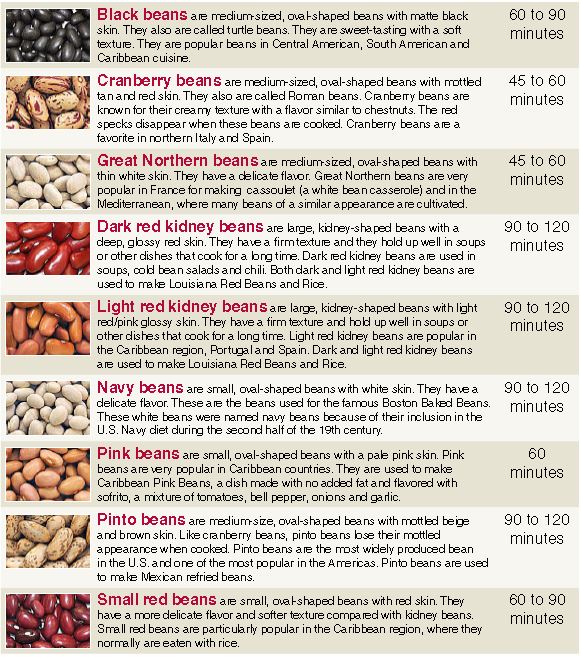
Numerous bean market classes are available in the U.S. and throughout the earth. While different beans do non vary greatly in nutrient content, they do differ slightly in gustatory modality, texture and cooking times. The following chart describes 9 of the near common beans found in American grocery stores and lists some mutual cuisines using beans. The cooking time refers to the amount of time to cook dry beans.
Preparing Dry Beans
Dry beans offer diet, health and economic benefits. Even so, yous need to follow certain steps to ensure dry out beans are cooked properly. The four basic steps are 1) clean, 2) rinse, three) soak and four) melt. The first two steps simply involve removing any cleaved beans or strange objects from beans, and so rinsing them in a colander under cold running water.
Comparison Soaking Methods
The 3 different soaking methods vary in the amount of fourth dimension required for acceptable soaking. The "hot soak" method typically is recommended because it reduces cooking time and gas-producing compounds the nearly while consistently yielding tender beans.
| Traditional Soak | Hot Soak (preferred) | Quick Soak |
| 1. Pour cold water over beans | ane. Place beans in a big pot and add 10 cups of water for every | 1. Place beans in a large pot and add together 6 cups of water for every |
| 2. Soak beans for eight hours or overnight. | 2. Heat to boiling and boil for an additional ii to three minutes. | ii. Bring to boil and boil for an additional two to iii minutes. |
| 3. Bleed beans and discard soak water. | 3. Remove beans from heat, cover and let stand for four to 24 hours. | 3. Remove beans from estrus, cover and permit stand for one hour. |
| 4. Rinse beans with fresh, cool water. | 4. Bleed beans and discard soak h2o. | iv. Drain beans and discard soak water. |
| 5. Rinse beans with fresh, cool water. | 5. Rinse beans with fresh, cool water. | |
| Advantages: | Advantages: | Advantages: |
| Disadvantages: | Disadvantages: | Disadvantages: |
4 Steps to Soaking Dry out Beans
- First, inspect the dry beans, removing whatsoever broken beans or foreign materials.
- Rinse thoroughly in cold water.
- Next, use the preferred "hot soak" method: Add together ten cups of common cold water to the pot for each pound (2 cups) of beans prepared. Bring the water to a boil and eddy for i to three minutes. Cover the pot. Let stand. A four-hr soak is ideal.
- Finally, bleed and rinse soaked beans. Melt and use in recipes.
two cups of dry beans = four to 5 cups of cooked beans
Acme ten Tips for Cooking Dry out Beans
- To cook soaked beans, add fresh, cold water to fully encompass beans, plus i to 2 tablespoons of oil, if you wish. Adding oil prevents foaming and boiling over. Foam besides can be skimmed off during cooking. Simmer the beans until they are tender.
- Cook merely 1 kind of bean at a time if possible. Different types and ages of beans take different cooking times, and so avoid cooking unlike types of beans together at the same time.
- Maintain water at a gentle simmer (not rapid boil) during cooking to prevent split skins.
- Do not add together blistering soda to beans at any fourth dimension. This will brand the beans more tender but destroys the B vitamin thiamine and also may bear on the flavour negatively.
- Stir beans occasionally to forbid sticking during cooking.
- Keep beans covered with water during the cooking process. Add together cold water periodically during cooking to ensure beans are covered.
- Check beans for doneness before eating. When cooked properly, beans should be tender only not mushy. Skins still should be intact, but the bean can be mashed easily between two fingers or with a fork.
- Drain beans immediately subsequently they have reached desired texture to prevent overcooking.
- To add season afterwards beans accept finished cooking, try adding a drizzle of extra virgin olive oil immediately before serving rather than adding high-fat ingredients (such as bacon) during cooking. (See "Flavor-booting Tips" on p. 10.)
- To cook beans quickly, attempt a pressure cooker, post-obit the manufacturer's instructions. This allows beans to cook in one-half the time and eliminates the need for soaking. Yet, this does not give the beans much time to absorb flavors from other ingredients. Therefore, employ a pressure level cooker when beans are needed quickly or to be used as a part of another flavorful dish.
Notation: Hard water (naturally high in minerals) may affect cooking fourth dimension/softening of beans. Distilled or softened water may result in a improve end product.
Beans, Beans: Gas-reducing Tips
Consumption of nutrient-rich beans could decrease the hazard for several chronic diseases; however, some people may exist hesitant to increase beans in their diet due to the fear of intestinal gas and tummy discomfort, including increased flatulence. Certain nondigestible carbohydrates, termed oligosaccharides, are responsible. Some researchers accept reported that flatulence associated with bean intake may be exaggerated, and individuals vary in their response to increased fiber intake [57]. Researchers suggest discarding the soaking and cooking water to remove some of these nondigestible carbohydrates [58].
Attempt these tips to reduce the occurrence of intestinal gas when eating beans:
- Increase beans in your diet slowly. For case, y'all may first by eating ii to iv tablespoons of beans per day, and gradually increase each solar day.
- Potable more water each solar day equally y'all eat more than beans (or other fiber-containing foods).
- Use the hot soak method when preparing dry beans. The longer beans soak, the more you will reduce the amounts of the gas-producing compounds.
- Change the water several times when soaking dry beans, and discard this water when soaking is completed. Many of the gas-causing carbohydrates are released into this soaking h2o.
- Rinse canned beans without sauce (such as kidney, navy, Great Northern) before eating or using in recipes.
- Consider using a gas-reducing enzyme tablet. These tablets are bachelor over the counter in many pharmacies.
Season-boosting Tips
Beans tend to absorb the flavors of the ingredients with which they are cooked. However, take care to ensure that these added foods merely increase flavour and exercise non hinder texture development. Follow these tips when calculation each of these ingredients to beans to make them delicious and nutritious:
- Acid: Adding sources of acid is a neat way to increase the depth of flavor in bean dishes. Add foods such as lemon juice, vinegar, tomatoes, chili sauce, ketchup, molasses or wine subsequently beans take been cooked fully. These acidic foods tin can preclude beans from becoming tender and lengthen cooking time if they are added too soon.
- Onions: Adding onions also can increase the depth of flavor in beans. Add onions any fourth dimension during the cooking process, just for a stronger onion flavour, add during the last 30 minutes of cooking.
- Herbs and spices: Add oregano, thyme, garlic, parsley or any other herbs/spices any time during cooking. Still, continue in mind that flavors of herbs and spices tend to diminish the longer they are cooked.
- Table salt: Add when the beans are almost tender because common salt tends to toughen beans. Call back to use minimal amounts of salt to limit the sodium content of beans.
On the Card: Beans!
How practice you first eating more than beans and reaping the many health benefits? Calculation more beans to your daily diet can exist as piece of cake as adding them to the foods yous already enjoy. Beans take a neutral flavour. Endeavour some of the recipes included at the end of this publication. Here are a few ideas for adding beans to your diet:
- Main dishes: Add beans to chili, burgers and rice for a satisfying entrée. Or try replacing the meat in recipes with beans, such as a edible bean enchilada or black edible bean and cheese quesadilla.
- Side dishes: Broiled beans or a bean salad would make a not bad improver to any repast.
- Salads: Add beans to salads for added nutrition, color and texture.
- Pasta: Adding beans to pasta dishes will provide some other dimension of flavor and boost the appearance of the dish.
- Soup: Pureed beans can be used to replace cream or higher-fat ingredients.
- Dips and spreads: Bean dips and spreads make a corking snack or appetizer.
- Baked appurtenances: Replace all or part of the fatty ingredients with mashed or pureed beans in foods such equally brownies and cookies. Beans will requite the broiled items additional protein and fiber and reduce fatty, cholesterol and calories.
Beans in Baked Goods
Enquiry has shown that pureed beans can exist used to supersede up to 50 percentage of the fat in brownie recipes and yet yield an acceptable end product [59]. Edible bean flours also are being fabricated and used in grain products, such equally tortillas. Up to 25 percent of wheat flour in tortillas can be replaced with bean flours, which yield a tortilla with like texture, appearance and flavor while improving the overall food profile [lx].
Decreasing Sodium in Canned Beans
Consuming a diet high in sodium is linked to the development of hypertension and increased hazard for eye disease. Canned vegetables, including canned beans, contain higher amounts of sodium than their fresh or less-processed counterparts. However, these beans all the same contain all of the valuable nutrients as their dry counterparts and can be part of a healthy diet.
To reduce the sodium content in canned beans, simply drain and rinse them before consuming or adding to recipes. Researchers reported that draining canned beans reduces sodium content by 36 per centum, while draining and rinsing canned beans reduces the sodium content by 41 percentage [61].
Recipes
Central to abbreviations
c. = cup(s)
lb. = pound(s)
Tbsp. = tablespoon(southward)
pkg. = packet(due south)
tsp. = teaspoon(s)
g = gram(s)
oz. = ounce(s)
mg = milligram(s)
Note: You may notation variations in the weights of the canned products you purchase. A slight difference in the amount of ingredients you lot add will non bear upon the overall quality of these recipes.
Recipes were analyzed using Food Processor SQL software.
Notation: Beans can be used interchangeably in these recipes. Soaked, cooked beans prepared according to the directions provided tin exist used in place of tuckered, rinsed canned beans.
Arriba Nacho Dip
2 cloves garlic, finely chopped
1 c. onion, finely chopped
1 c. green bell pepper, finely chopped
½ jalapeno pepper, finely chopped
3 large Roma tomatoes, chopped
¼ c. cilantro, finely chopped
¼ c. lemon juice
i (15-oz.) tin fat-free refried beans
4 oz. reduced-fat cheddar cheese, shredded
Make salsa by combining the start seven ingredients in a basin; mix to combine. Put refried beans and salsa in a pot; stir until blended. Cook on low to medium heat for 20 minutes. Add cheese and allow to melt on top. Serve with tortilla chips or veggies.
Makes 12 servings. Per serving: 60 calories, 0.5 g fat, 4 g protein, 8 yard carbohydrate, 2 g fiber and 230 mg sodium
Black Bean and Fruit Salsa
½ c. mango, peeled and cubed
i c. papaya, peeled and diced
½ c. pineapple, diced
½ c. black beans, canned, drained and rinsed
1 Tbsp. cilantro, minced
1 Tbsp. lime juice (fresh-squeezed for best flavor)
ane Tbsp. actress-virgin olive oil
1 tsp. cumin
¼ tsp. black pepper
one clove garlic, minced
Combine all ingredients in a large bowl; toss gently to glaze.
Makes eight servings. Per serving: 40 calories, 2 g fat, 0 g protein, vi k saccharide, i grand cobweb and 0 mg sodium
Mediterranean Edible bean Salad
one (15.v-oz.) can beans (Great Northern, navy or white kidney), tuckered and rinsed
½ c. sun-dried tomatoes, cutting into strips
ane/3 c. black olives, drained and chopped
one/iii c. fat-free or reduced-fat feta cheese, crumbled
1/iii c. blood-red onion, finely chopped
2 cloves garlic, finely minced
ii Tbsp. fresh cilantro, chopped
2 Tbsp. olive oil
ii Tbsp. lemon juice
Fresh basis pepper
Drain and rinse beans. Combine all ingredients in a bowl and mix thoroughly. Serve on a lettuce leaf with grilled flat bread, tossed with pasta, in a pita pocket sandwich, on tiptop of tossed salad or with whole-grain chips or crackers.
Makes six servings. Per serving: 150 calories, 7 g fat, 5 g protein, sixteen one thousand carbohydrate, 5 thousand fiber and 200 mg sodium
Three-Bean Pasta Salad
8 oz. whole-grain pasta
1 (15.5-oz.) tin three-bean salad, chilled
2 c. grape tomatoes
i tsp. stale dill weed
Cook pasta according to packet directions. Bleed. Rinse with cold water and identify in a medium-sized bowl. Add together undrained three-bean salad, tomatoes and dill. Mix gently, cover and arctic.
Makes vi servings. Per serving: 110 calories, 0 g fat, five g protein, 25 g carbohydrate, iv g fiber and 280 mg sodium
Sizzlin' Baked Beans
1 (28-oz.) can vegetarian broiled beans, undrained
½ green pepper, chopped
½ red pepper, chopped
i onion, chopped
ane½ Tbsp. molasses
1½ Tbsp. ketchup
4 strips uncooked turkey bacon, diced
Salt and pepper to taste
In a 9- past 13-inch greased pan, mix all ingredients, except turkey salary. Dark-brown turkey salary and drain fat. Crumble and sprinkle turkey salary evenly over the top. Bake in preheated oven at 350 F for twoscore minutes.
Makes 12 servings. Per serving: 100 calories, i.five one thousand fatty, five g protein, 19 g sugar, 4 g fiber and 360 mg sodium
Turkey and Edible bean Chili
1 Tbsp. olive oil
1 yellow or white onion, chopped
1 light-green bell pepper, chopped
two cloves garlic, chopped
½ lb. footing turkey
two Tbsp. tomato plant paste
i tsp. ground cumin
2 tsp. chili powder
one (28-oz.) tin can diced tomatoes
ii (15-oz.) cans beans (kidney, small red, pink), tuckered and rinsed
½ c. h2o
¼ c. reduced-fat sour cream
1¼ tsp. salt
¼ tsp. pepper
Cilantro sprigs, for serving
Heat oil in a big saucepan over medium-high heat. Add together onion, bell pepper and garlic. Cook, stirring occasionally, simply until vegetables are tender. Add turkey and cook, breaking upwards with a spoon, until no longer pink. Stir in love apple paste, cumin and chili pepper. Cook and stir for one minute. Add together tomatoes (with liquid), beans, water, one¼ tsp. salt and ¼ tsp. pepper. Bring to a boil. Reduce estrus and simmer, stirring occasionally, until slightly thickened, 12 to 15 minutes. Serve with sour foam and cilantro.
Makes 8 servings. Per serving: 170 calories, 3 g fat, thirteen g protein, 23 grand carbohydrate, 7 one thousand cobweb and 300 mg sodium
Stuffed Peppers
four medium bell peppers, any color
½ medium onion, chopped
2 c. corn (fresh or frozen)
2 small tomatoes, chopped
2 (15.5-oz.) cans black beans, drained and rinsed
2 tsp. olive oil
ane tsp. cumin
½ tsp. cayenne pepper
one garlic clove, minced
ii tsp. cilantro, finely chopped
1 c. shredded reduced-fat cheddar cheese (try pepperjack for more spice)
Rinse peppers and cut in half lengthwise; remove seeds. Place peppers in a large pot and cover with water. Bring to a boil, reduce the heat, cover and simmer for five minutes; bleed. Prepare pepper halves on greased blistering sheet. Preheat oven to 350 F. In a small skillet, sauté the chopped onion in olive oil until tender.
Mix together onions, tomatoes, corn and black beans in a medium-sized bowl. In a small bowl, combine oil and seasonings; add together to vegetable mixture and mix thoroughly. Fill pepper halves with mixture and top with cheese. Broil for eight to 10 minutes or until cheese is melted.
Makes 8 servings. Per serving: 130 calories, two 1000 fat, vii g protein, 26 g carbohydrate, vii g fiber and 240 mg sodium
Chocolate Scrap Edible bean Muffins
2 (15.v-oz.) cans beans (Bang-up Northern, navy, white kidney), drained and rinsed
1/iii c. depression-fat milk
1 c. carbohydrate
¼ c. butter or margarine
3 eggs
iii tsp. vanilla extract
i c. all-purpose flour
½ c. whole-wheat flour
1 tsp. baking soda
½ tsp. salt
¾ c. semisweet chocolate chips
Combine beans and milk in a food processor or blender until smooth. Mix sugar and butter or margarine in a big bowl; beat in eggs and vanilla. Add edible bean mixture, mixing until well composite. Mix in flours, baking soda and salt. Add in chocolate chips. Spoon mixture into 16 greased or newspaper-lined muffin tins well-nigh one-half full. Broil at 375 F for 20 to 25 minutes. Absurd on wire racks.
Makes 16 servings. Per serving: 240 calories, vii thou fatty, 6 thousand protein, 37 g sugar, 5 g fiber and 115 mg sodium
Web-based Resource
The Edible bean Plant website includes the latest research, cooking videos, newsletters, recipes and other resources.
References
- Mitchell DC, Lawrence FR, Hartman TJ, Curran JM. Consumption of dry beans, peas, and lentils could improve diet quality in the US population. J Am Diet Assoc. 2009;109:909-913.
- Darmadi-Blackberry I, Wahlqvist ML, Kouris-Blazos A, Steen B, Lukito W, Horie Y, et al. Legumes: the nigh important dietary predictor of survival in older people of dissimilar ethnicities. Asia Pacific J Clin Nutr. 2004;thirteen(two):217–220.
- Lucier K, Lin B-H, Allshouse J, Kantor LS. (2000, April). Factors affecting dry bean consumption in the Usa (S & O/VGS-280). USDA Economical Enquiry Service.
- Nutrient and Agronomics Organization of the United Nations. Definition and classification of commodities, 4. Pulses and derived products [cited 2013 February 13].
- Drewnowski A. The Nutrient Rich Foods Index helps to identify healthy, affordable foods. Am J Clin Nutr. 2010;91(suppl):1095S–1101S.
- The states Section of Agronomics, Agronomical Enquiry Service, 2012. USDA National Food Database for Standard Reference, Release 25. Nutrient Data Laboratory Abode Page.
- United States Section of Agriculture, Health and Human being Services. Chapter 4 in Dietary Guidelines for Americans , 2010. 7th Edition, Washington, DC: U.Southward. Government Printing Office, January 2010. [cited 2012 Dec xx].
- United States Food and Drug Assistants. Guidance for Industry: A Nutrient Labeling Guide [cited 2013 March 14].
- Anderson JW, Baird P, Davis RH, Ferreri S, Knudtson M, Koraym A, et al. Health benefits of dietary fiber. Nutr Rev. 2009;67(iv):188-205.
- Bourdon I, Olson B, Backus R, Richter BD, Davis PA, Schneeman BO. Beans, as a source of dietary fiber, increase cholecystokinin and apolipoprotein B48 response to test meals in men. J Nutr. 2001;131:1485-1490.
- Brownish Fifty, Rosner B, Willett WW, Sacks FM. Cholesterol-lowering effects of dietary fiber: a meta-analysis. Am J Clin Nutr. 1999;69:30-42.
- Anderson JW, Bridges SR. Dietary fiber content of selected foods. Am J Clin Nutr. 1988;47:440-447.
- United States Food and Drug Administration, Health and Human Services: Code of Federal Regulations. Department 101.79 — Health claims: folate and neural tube defects. 2012;2.
- Hoppner Thou, Lampi B. Folate retention in dried legumes after different methods of meal preparation. Nutrient Res Int. 1993;26:45-48.
- Keagy PM, Shane B, Oace SM. Folate bioavailability in humans: furnishings of wheat bran and beans. Am J Clin Nutr. 1988;47:80-88.
- Ashfield-Watt PAL, Moat SJ, Doshi SN, McDowell IFW. Folate, homocysteine, endothelial function and cardiovascular disease. What is the link? Biomed Pharmacother. 2001; 55:425-33.
- Ueland PM, Refsum H, Beresford SAA, Vollset SE. The controversy over homocysteine and cardiovascular adventure. Am J Clin Nutr. 2000;72:324-32.
- Van Horn L, McCoin M, Kris-Etherton PM, Burke F, Carson JS, Champagne CM, et al. The evidence for dietary prevention and treatment of cardiovascular affliction. J Am Nutrition Assoc. 2008;108:287-331.
- Anderson JW, Gustafson NJ, Spencer DB, Tietyen J, Bryant CA. Serum lipid response of hypercholesterolemic men to unmarried and divided doses of canned beans. Am J Clin Nutr. 1990;51:1013-1019.
- Bazzano LA, Thompson AM, Tees MT, Nguyen CH, Winham DM. Non-soy legume consumption lowers cholesterol levels: a meta-analysis of randomized controlled trials. Nutr Metab Cardiovasc Dis. 2011;21:94-103.
- Finley JW, Burrell JB, Reeves PG. Pinto bean consumption changes SCFA profiles in fecal fermentations, bacterial populations of the lower bowel, and lipid profiles in claret of humans. J Nutr. 2007;137:2391-2398.
- Kabagambe EK, Baylin A, Ruiz-Narvarez E, Siles Ten, Campos H. Decreased consumption of dried mature beans is positively associated with urbanization and nonfatal astute myocardial infarction. J Nutr. 2005;135:1770-1775
- Mattei J, Hu FB, Campos H. A higher ratio of beans to white rice is associated with lower cardiometabolic adventure factors in Costa Rican adults. Am J Clin Nutr. 2011;94:869-876.
- Shutler SM, Bircher GM, Tredger JA, Morgan LM, Walker AF, Low AG. The upshot of daily baked bean (Phaseolus vulgaris) consumption on the plasma lipid levels of young, normo-cholesterolaemic men. Br J Nutr. 1989;61:257-265.
- Winham DM, Hutchins AM, Johnston CS. Pinto bean consumption reduces biomarkers for center disease hazard. J Am Coll Nutr. 2007;26(3):243-249.
- Venn BJ, Isle of mann JI. Cereal grains, legumes and diabetes. Eur J Clin Nutr. 2004;58:1443-1461.
- Leathwood P, Pollet P. Effects of wearisome release carbohydrates in the grade of edible bean flakes on the development of hunger and satiety in man. Ambition. 1988;x(1):ane-11.
- Hosseinpour-Niazi S, Mirmiran P, Sohrab G, Hosseini-Esfahani F, Azizi F. Changed association between fruit, legume, and cereal cobweb and the risk of metabolic syndrome: Tehran lipid and glucose written report. Diabetes Res Clin Prac. 2011;94:276-283.
- Jenkins DJA, Kendall CWC, Augustin LSA, Mitchell South, Sahye-Pudaruth S, Mejia SB, et al. Result of legumes equally part of a low glycemic index diet on glycemic command and cardiovascular take chances factors in type two diabetes mellitus. Curvation Intern Med. 2012; Epubdoi:ten.1001/2013.jamainternmed.70.
- Aune D, De Stefani E, Ronco A, Boffetta P, Deneo-Pellegrini H, Acosta 1000, et al. Legume intake and the risk of cancer: a multisite case-command report in Uruguay. Cancer Causes Command. 2009;20:1605-1615.
- Amarowicz R, Pegg RB. Legumes as a source of natural antioxidants. Eur J Lipid Sci Technol. 2008;110:865-878.
- Wang Southward, Meckling KA, Marcone MF, Kakuda Y, Tsao R. Synergistic, condiment, and antagonistic effects of food mixtures on total antioxidant capacities. J Agric Nutrient Chem. 2011;59:960-968.
- Thompson MD, Mensack MM, Jiang W, Zhu Z, Lewis MR, McGinley JN, et al. Jail cell signaling pathways associated with a reduction in mammary cancer burden past dietary common bean (Phaseolus vulgaris L.). Carcinogenesis. 2012;33(1):226-232.
- Dahm CC, Keogh RH, Spencer EA, Greenwood DC, Primal TJ, Fentiman IS, et al. Dietary fiber and colorectal cancer risk: a nested case-control study using food diaries. J Natl Cancer Inst. 2010;102(9):614-626.
- Bobe G, Barrett KG, Mentor-Marcel RA, Saffiotti U, Immature MR, Colburn NH, et al. Dietary cooked navy beans and their fractions benumb colon carcinogenesis in azoxymethane-induced ob/ob mice. Nutr Cancer. 2008;60(3):373-381.
- Lanza E, Hartman TJ, Albert PS, Shields R, Slattery M, Caan B, et al. Loftier dry bean intake and reduced adventure of avant-garde colorectal adenoma recurrence among participants in the polyp prevention trial. J Nutr. 2006;136:1896-1903.
- Mentor-Marcel RA, Bobe Yard, Barrett KG, Young MR, Albert PS, Bennink MR, et al. Inflammation-associated serum and colon markers as indicators of dietary attenuation of colon carcinogenesis in ob/ob mice. Cancer Prev Res. 2009;2(one):60-69.
- Mills PK, Beeson WL, Phillips RL, Fraser GE. Cohort written report of diet, lifestyle, and prostate cancer in Adventist men. Cancer. 1989;64:598-604.
- Kolonel LN, Hankin JH, Whittemore AS, Wu AH, Gallagher RP, Wilkens LR, et al. Vegetables, fruits, legumes and prostate cancer: a multiethnic instance-command report. Cancer Epidemiol Biomarkers Prev. 2000;9:795-804.
- Vinson JA, Hao Y, Su X, Zubik L. Phenol antioxidant quantity and quality in foods: vegetables. J Agric Food Chem. 1998;46:3630-3634.
- Madhujith T, Naczk M, Shahidi F. Antioxidant activity of mutual beans (Phaseolus vulgaris L.) J Food Lipids. 2004;11:220-233
- Xu BJ, Chang SKC. Full phenolic content and antioxidant properties of eclipse black beans (Phaseolus vulgaris L.) as afflicted by processing methods. J Food Sci. 2008;73(2): H19-H27.
- Papanikolaou Y, Fulgoni VL. Bean consumption is associated with greater nutrient intake, reduced systolic blood pressure, lower body weight, and a smaller waist circumference in adults: results from the National Health and Nutrition Exam Survey 1999-2002. J Am Coll Nutr. 2008;27(v):569-576.
- Ledikwe JH, Smiciklas-Wright H, Mitchell DC, Miller CK, Jensen GL. Dietary patterns of rural older adults are associated with weight and nutritional status. J Am Geriatr Soc. 2004;52:589-595.
- Hermsdorff HHM, Zulet MA, Abete I, Martínez JA. A legume-based hypocaloric diet reduces proinflammatory condition and improves metabolic features in overweight/obese subjects. Eur J Nutr. 2011;50:61-69.
- Williams PG, Grafenauer SJ, O'Shea JE. Cereal grains, legumes, and weight management: a comprehensive review of the scientific evidence. Nutr Rev. 2008;66(4):171–182.
- Sichieri R. Dietary patterns and their associations with obesity in the Brazilian urban center of Rio de Janeiro. Obes Res. 2002;10(1):42-48.
- Cunha DB, de Almeida RMVR, Sichieri R, Pereira RA. Association of dietary patterns with BMI and waist circumference in a low-income neighbourhood in Brazil. Br J Nutr. 2010;104:908-913.
- McCrory MA, Hamaker BR, Lovejoy JC, Eichelsdoerfer PE. Pulse consumption, satiety, and weight direction. Adv Nutr. 2010;1:17–xxx.
- Abete I, Parra D, Martinez JA. Legume-, fish-, or high-protein-based hypocaloric diets: effects on weight loss and mitochondrial oxidation in obese men. J Med Food. 2009;12(1):100-108.
- Zhang Z, Lanza East, Ross AC, Albert PS, Colburn NH, Rovine MJ, et al. A high-legume low-glycemic index diet reduces fasting plasma leptin in middle-anile insulin-resistant and -sensitive men. Eur J Clin Nutr. 2011;65:415-418.
- Newby PK. Plant foods and found-based diets: protective against childhood obesity? Am J Clin Nutr. 2009;89(suppl):1572S–1587S.
- United States Section of Agriculture, Food and Nutrition Service. Child Nutrition Programs, Function 210, National Schoolhouse Lunch Program [cited 2013 Feb twenty].
- Niewinski MM. Advances in celiac illness and gluten-free diet. J Am Diet Assoc. 2008;108:661-672.
- Craig WJ. Health Effects of vegan diets. Am J Clin Nutr. 2009;89(suppl):1627S–1633S.
- United States Section of Agriculture, Economical Enquiry Service. Retail data for beef, pork, poultry cuts, eggs and dairy products (September 14, 2012). Cited 2012 October 15.
- Winham DM, Hutchins AM. Perceptions of flatulence from bean consumption among adults in 3 feeding studies. Nutr J. 2011;ten:128.
- Vidal-Valverde C, Frías J, Valverde Due south. Changes in the saccharide composition of legumes later soaking and cooking. J Am Diet Assoc. 1993;93:547-550.
- Szafranski Chiliad, Whittington JA, Bessinger C. Pureed cannellini beans can be substituted for shortening in brownies. J Am Nutrition Assoc. 2005;105(8):1295-1298.
- Anton AA, Ross KA, Lukow OM, Fulcher RG, Arntfield SD. Influence of added bean flour (Phaseolus vulgaris L.) on some physical and nutritional backdrop of wheat flour tortillas. Food Chem. 2008;109:33-41.
- Duyff RL, Mount JR, Jones JB. Sodium reduction in canned beans after draining, rinsing. J Culin Sci Technol. 2011;nine(2):106-112.
Copy editor: Ellen Crawford, NDSU Agriculture Communication
Technical editor: Rebecca W, NDSU
Publication designer: Deb Tanner, NDSU Agriculture Advice
Recipe photos: Stacy Wang, NDSU Wellness, Nutrition and Exercise Sciences
Edible bean photos: David Haasser, NDSU Agriculture Communication
Source: https://www.ag.ndsu.edu/publications/food-nutrition/all-about-beans-nutrition-health-benefits-preparation-and-use-in-menus
0 Response to "How Many Calories Are in 5 Oz of Ground Beef How Many Calories in 1/2 Medium Tomato"
Postar um comentário