‘Inconvenience stores’ help Thailand turn green amid plastic crisis
Advertisement
Asia
'Inconvenience stores' assist Thailand turn green amid plastic crisis

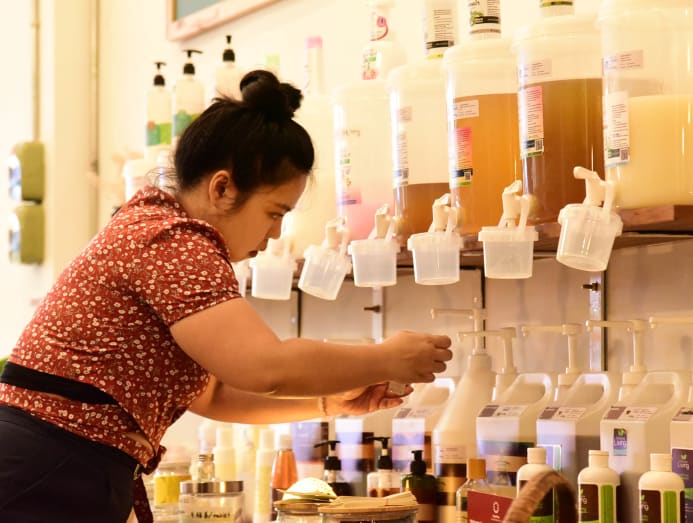
Eco-conscious bulk store Refill Station in the Thai capital Bangkok encourages customers to reduce plastic use and prefer a more than environmentally friendly lifestyle. (Photo: Pichayada Promchertchoo)

BANGKOK: Well-nigh retailers strive to make shopping like shooting fish in a barrel for customers. But Papawee Pongthanavaranon is determined to make it less user-friendly.
Her clients must come prepared with empty containers and shopping bags - a practice still largely uncommon in Thailand - and pay for a range of environmentally sourced merchandise at her self-service bulk shop Refill Station in the capital.
A majority store is an emerging type of eco-witting retailer. Products are priced according to quantity and sold with zippo or low-plastic packaging. Dissimilar traditional shops, they require customers to bring their own containers or borrow and return them on their next purchase.

The businesses are common in many developed countries which have greater awareness of environmental problems. In Thailand, however, it is a new and unusual concept.
"We're an 'inconvenient store'. While others get with concepts similar 'ready-to-eat', 'ready-to-cook' and 'ready-to-use', we have goose egg 'prepare'. All the products hither make life more inconvenient but our customers are set up to change," Papawee told CNA.
The thirty-year-quondam architecture graduate opened the majority store two years ago with like-minded people, in one of Bangkok's busy alleyways. They are passionate environmentalists who promise to spread more green concepts in the city where they live and assist build a sustainable depression-waste community.

Each day, the Bangkok Metropolitan Administration collects an estimated x,000 tonnes of waste matter, including fourscore million plastic numberless. Its information showed an average Bangkok resident uses eight plastic bags per solar day and frequently throws them abroad afterward a single use. The longevity of plastic products, whose original form tin last 400 years, results in nigh of them going to landfills. The process costs authorities THB700 (U.s.$23) per tonne of plastic waste.
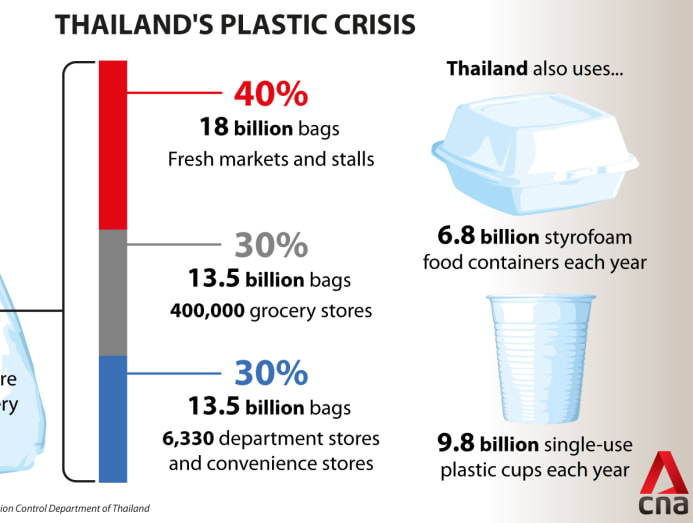
Nationwide, the plastic utilize shows no signs of falling. Thailand's Pollution Control Section reported last year the country uses 45 billion plastic numberless annually, vi.viii billion styrofoam food containers and 9.8 billion single-use plastic cups.
About 18 billion plastic bags are handed out at fresh markets and stalls, while the residuum - 27 billion numberless - come from retailers, malls and convenience stores, co-ordinate to the department's data.
The magnitude of plastic waste matter in Thailand has made many residents more than eco-conscious. In big cities, it is increasingly mutual to see people carrying cloth shopping bags, reusable h2o bottles, food containers and stainless straws. Simply a few years ago, Papawee said, the practice would have been strange for many people she knows.
Back so, environmentalists in Thailand wouldn't cartel express themselves. People idea nosotros were weird. They'd ask: 'Why practice you lot have to carry a water bottle?'. But these days, it's quite normal to do so and the question now would be: 'Why don't you do it?'.
DROWNING IN PLASTIC
In Bangkok, bulk stores accept begun to emerge equally demands for eco-friendly products and services grow in Thailand.
The country is facing a serious environmental challenge caused by millions of tonnes of plastic. In fact, it is the fifth biggest contributor in the world to bounding main waste. A 2022 report by Washington DC-based ecology advancement group Sea Conservancy showed more than half of plastic waste matter in the sea originated from five rapidly growing economies - Mainland china, Indonesia, the Philippines, Vietnam and Thailand.
Growth in GDP and improved quality of life in these countries has resulted in "exploding demand" for consumer goods, which exceeded their waste material-management infrastructure, the report added.
Unless steps are taken to manage this waste material properly, by 2025 the ocean could contain one ton of plastic for every 3 tons of finfish - an unthinkable outcome.
Each year, Thailand produces nigh 1.03 million metric tonnes of mismanaged plastic waste. More than iii per cent finds its style into the sea, according to Sea Salvation's report. It also added that more than 80 per cent of sea plastic comes from land-based sources - a event of uncollected waste and poor waste-management systems.
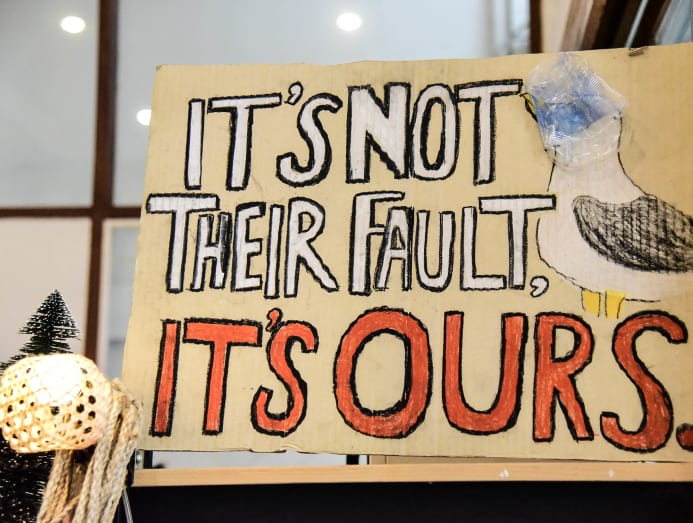
In Thailand, the problem of unmanaged plastic waste has prompted its environment government minister to convince 43 major shopping malls and convenience stores to finish handing out plastic bags to customers from Jan ane next twelvemonth.
"After a long time of campaigning against plastic waste, it's at present time to take existent activity," Minister of Environment Varawut Silpa-archa said in August.
"Let's become used to carrying cloth shopping bags today. Cut down on the convenience a petty to let the globe and the environment stay with humans for a long time."
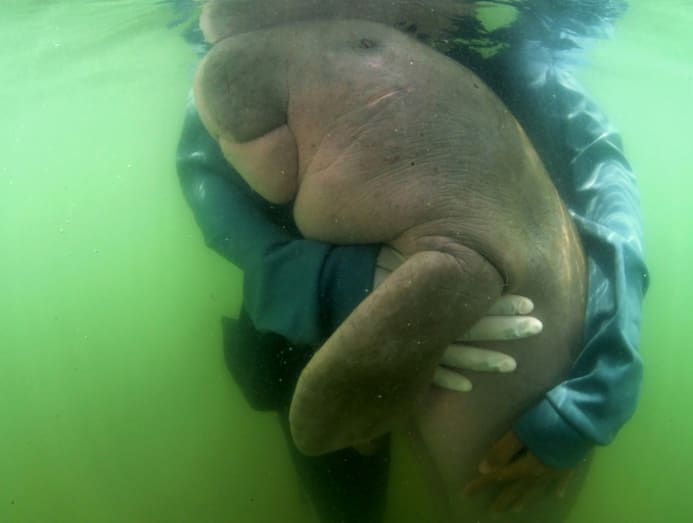
The motility came shortly after the death of a well-loved infant dugong, Mariam, who died in August afterwards months of intensive intendance. The autopsy linked the brute's decease to several pieces of plastic blocking its intestinal tract.
"The inflammation that ensued had caused gas build-upwardly in her digestive arrangement and blood infection," veterinarian Nantarika Chansue from Chulalongkorn University wrote on her Facebook page last calendar month.
While Thais have grieved for their love dugong, many of them were not surprised past the news.
It has go increasingly frequent for people in the land to hear reports about rare and threatened marine species constitute dead with plastic waste matter in their stomach. Last year, a brusk-finned pilot whale died in the coastal province of Songkhla after throwing up 5 plastic numberless. An autopsy revealed 80 more weighing 8kg in its stomach.
The pilot whale and the baby dugong are among an estimated 300 rare marine animals in Thailand that have died from ingesting waste matter and parts of line-fishing tools every year. According to the Department of Marine and Littoral Resources, threescore per cent of them are dolphins and whales, and the rest are turtles.
THAILAND'S PLASTIC ADDICTION
A zero-waste or depression-plastic lifestyle remains limited to a small network of people in Thailand largely because life can exist cheap and easy with plastic.
Pichmol Rugrod from Greenpeace Thailand said Thais' plastic addiction has stemmed from its convenience, availability and low cost. Affordable take-abroad services such as Grab Food, she added, have also increased plastic consumption in the land with single-apply plastic for packaging, cutlery and cups.
"Just a few months agone, Grab celebrated figures showing its nutrient delivery service had racked upwards 4 one thousand thousand orders in the first four months of 2019. And you lot don't need to exist a genius to piece of work out just how much plastic waste material would have been left backside," she told CNA, citing a lack of strong regulations and a sustainable plan for reducing plastic junk.
Thailand is in the grip of a growing plastic waste material crunch.
To cutting down on their plastic addiction, people in Thailand accept to pay more for eco-friendly products. They also have to put maximum endeavor in sorting and recycling waste due to a lack of waste material management options in the state.
Co-ordinate to Pichmol, only a quarter of plastic waste - mainly plastic bottles - was recycled terminal year. "Among the rest was around one.two meg tonnes of plastic bags, a major contributor to plastic pollution in Thailand," she added.

Nevertheless, many people believe their country can still overcome the plastic crisis. Its grim situation has not discouraged the likes of Papawee, who has noticed small-scale but gradual change in consumer behaviour over the past two years.
Refill Station now welcomes more customers than before. The variety of its products has too grown from shower gel, shampoo and dish-washing liquid to bamboo toothbrushes, reusable germ-free pads and plastic-free toothpaste tablets.
"These provide alternatives for whoever wants to starting time reducing plastic utilise; they can starting time with anything. Nosotros're also in the procedure of setting upwardly a food refill station," Papawee said.
"We have hope and we work based on that," she added. "We believe little things make swell change."
Source: https://cnalifestyle.channelnewsasia.com/asia/inconvenience-stores-help-thailand-turn-green-amid-plastic-crisis-294851
0 Response to "‘Inconvenience stores’ help Thailand turn green amid plastic crisis"
Postar um comentário